Showing posts with label Regulation. Show all posts

Monday, August 10, 2020

Evidence and Ethics in Food Fortification Policy Development

The primary objective of food fortification policy and programs is generally the “protection of public health and safety”. The ‘protection’ indicates the benefits associated with mandatory food fortification. On the other hand, ‘public health and safety’ refers to the risk of harm resulting from excessive nutrient intake. These two dimensions create ambiguity for the decision makers. The exposure to the raised level of nutrients can also have ethical consequences. The decision on fortification policy should be based both on the evidence and ethics.

The food fortification policy must be informed by sound scientific evidence. We generally use a term: evidence-informed-policy-making decision. There should be two types of evidence: evidence of food fortification to ‘promote’ public health; and evidence to ‘protect’ public health.

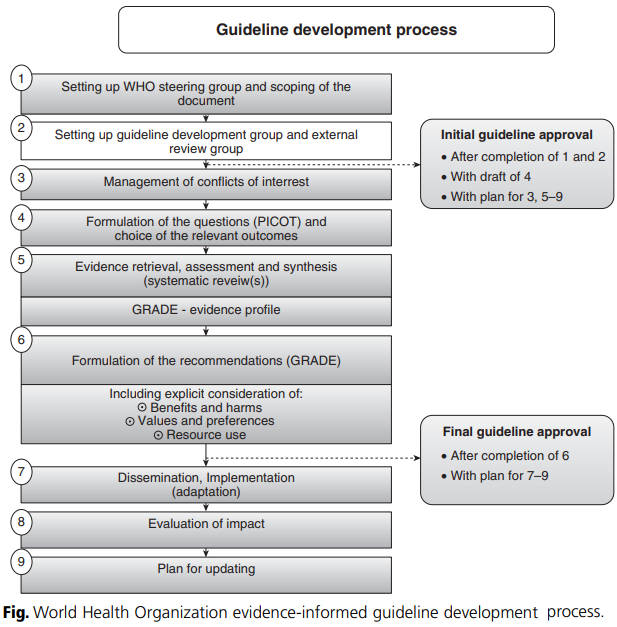
The evidence hierarchy method is used to evaluate the quality of evidence. For example, evidence based on randomized controlled trials (RCTs) is considered high quality. The process for developing evidence-informed guidelines was developed by WHO (2009). It consists of a nine step procedure as shown in figure below. 

WHO guideline development process

Monday, August 3, 2020

तोरी र रेपसिडको तेलमा भटमासको तेलको मिसावट सम्बन्धि प्रकाशित लेख

soybean adulteration in mustard and rapeseed oil
काठमाडौँ उपत्यकाको विभिन्न स्थानबाट संकलन गरिएको ४९ वटा नमुना मध्ये ५५% तोरी र रेपसिडको तेलमा भटमासको तेल मिसाई उपभोक्तालाई ठगी गरि राखिएको बारे अन्तरास्ट्रिय पत्रिकामा मेरो अनुसन्धान प्रकाशित भएको पनि ६ बर्ष भई सकेछ l सो सम्बन्धि नियमनको लागि हालसम्म केहि पनि उल्लेखनीय कार्य भए जस्तो लाग्दैन l उपभोक्ता कहिलेसम्म ठगिनु पर्ने हो ?

प्रकाशित लेखको लिंक यस प्रकार रहको छ l 

http://dx.doi.org/10.1016/j.foodres.2013.11.030

लेखको पूर्ण पाठ यस प्रकार रहको छ l  


Saturday, July 18, 2020

फलफुलको रसको प्रस्तावित गुणस्तर

Fruit juice

WTO SPS नोटिफिकेसनको चरणमा रहेको "फलफुलको रसको प्रस्तावित गुणस्तर " देहाय बमोजिम रहेको देखिन्छ l  (श्रोत: एस पी एस इनक्वारी पोइन्टको वेब साइट ) l  तपाइको प्रतिकृया वा सुझाब तल दिनु होला l 

Friday, July 17, 2020

Federal Inspections and Law Enforcement Tools used by FDA (US Food Regulation series: Part 5)

We have been publishing a series of posts related to US Food Regulation. We have already completed four parts of the series. The first part of the series entitled “US Food Law and Regulation Series: Part 1” was focused on the discussion of different regulatory body such as FDA, USDA/FSIS, CDC, NMFS, EPA, DHS etc. “US Food Law and Regulation Series: Part 2” described the issues related to food, dietary supplement and drug. The third part was about the "History of the regulation of dietary supplements (US Food Regulation series: Part 3). In the fourth part, we discussed on the topic of "Jurisdictional overlap between FDA and USDA (US Food Regulation series: Part 4)". 

In this post we will discuss about the "Federal Inspections and Law Enforcement Tools used by FDA".

Generally, FDA does not go to the facility for inspection on a daily basis. FDA conducts warrantless inspections generally for a special cause such as recall, adverse events, or for surveillance inspection. The regulatory work can be divided into two groups: “pre-market” and “post-market surveillance” activities.

Center for Food Safety and Applied Nutrition (CFSAN) of FDA is mainly responsible for pre market activities of food products. In addition, Center for Veterinary Medicine (CVM), Center for Drug Evaluation and Research (CDER), Center for Biologics Evaluation and Research (CBER), Center for Device and Radiological Health (CDRH), and Center for Tobacco Products (CBT) are also product-oriented centers of FDA focusing on pre-market surveillance activities.

The post market surveillance activities are mainly the responsibility of Office of Regulatory Affairs (ORA). It works for all the six product-oriented centers and not only for CFSAN. Hence, it carries out investigation of drug, medical device, cosmetic, biologics, veterinary products, food, beverage, and dietary supplements. The criminal investigation part of FDA is handled by Office of Criminal Investigations (OCI). 

FDA enforcement tools

FDA uses different law enforcement tools as per Food, Drug and Cosmetic act. The most important tools are as follows:

a) Form 483

It is simply a notice of potential violations found during inspection and is issued by the inspector after facility inspection . It only contains opinion of inspectors and is not reviewed by a compliance office or other FDA officers prior to being issued.

b) Warning letters as enforcement instruments

The first enforcement tool used by FDA is a warning letter, which functions as a prior notice. This is not a statutory creature and is not mandatory. FDA can initiate formal enforcement action without warning letters.

FDA enforcement action progress graph

The Form 483 and warning letters are informal enforcement actions of FDA. There are five formal enforcement actions taken by FDA: (1) seizures and administrative detentions, (2) recalls, (3) import refusals and alerts, (4) restraining order or injunctions, and (5) suspension of facility registration.

1) Seizure and administrative detentions

The decision of seizure by FDA is taken only when there is a question of safety. Seizure requires court warrant and is carried out by US Marshals. FDA is only involved indirectly. An administrative detention is less severe form of temporary action. After FSMA regulation, if FDA agents have “reason to believe food is adulterated or misbranded”, they can take temporary hold of products for 30 days to carry out investigation.

Seizure and administrative detentions

2) Recalls

Recall is one of the best known FDA enforcement actions. Recall is mainly linked with some type of outbreak of food-borne illness. Generally, recall is a voluntary action carried out by the manufacturer. After the enforcement of Food Safety Modernization Act (FSMA), FDA is authorized to force a recall without court order under certain circumstances.

3) Import Refusal and Import Alerts

Before entering the US market, products must pass through both the customs and FDA. Previously, FDA agent used to randomly inspect the containers based on their experience or previous history. Now, FDA has launched PREDICT (Predictive Risk-based Evaluation for Dynamic Import Compliance Targeting) system which uses a complex algorithm to determine the risk and the likelihood of violation on a particular product. The new system is an example of Risk based food import control system.

Imported products must comply with the standards. Otherwise, they can be detained, refused, returned, destroyed and even blacklisted. If the products do not comply with standards, FDA provides a notice of its decision to refuse admittance and issues FDA Import Detention Notice. The importer can provide oral testimony or submit written evidence within 10 days time frame.

The legislation states that FDA can refuse entry to a products based on the examination of samples that appears adulterated or misbranded. FDA may also issue an import alert that essentially acts as a blacklist. If a facility is on an import alert, all the shipments can be refused (detention without physical examination (DWPE)). The petition-for-removal from import alert takes a long process (may be more than a year) and must present evidence on how the violation was corrected. FSMA regulation has mandated a new rule known as Foreign Supplier Verification Program (FSVP).
Tuesday, July 14, 2020

Opinion Poll on FDA

poll

Jurisdictional overlap between FDA and USDA (US Food Regulation series: Part 4)

In the previous post entitled “US Food Law and Regulation Series: Part 1”, we focused our discussion on the different regulatory body Food and Drug Administration (FDA) , US Department of Agriculture’s Food Safety Inspection Service (USDA/ FSIS), CDC, NMFS, EPA, DHS etc and their interaction in the food safety regulation. In the second part of the series entitled “US Food Law and Regulation Series: Part 2”, we tried to discuss the issues in the definition of food, dietary supplements and drug. We also discussed the concept of “intended use” and how it can have impact on the definition. In the third part of the series entitled, "History of the regulation of dietary supplements (US Food Regulation series: Part 3)", we discussed about the problems and issues of dietary supplement regulation by FDA. The era of confusion on the regulation of dietary supplements ranged from 1906 till 1994, when FDA and manufacturers faced multiple incidences of court cases due to regulatory ambiguity and differences in understanding. It demanded for a separate DSHEA act in 1994 for the regulation of dietary supplement as food. Based on the discussion, we had concluded that single food and drug control agency is not a requirement for the regulation of dietary supplement. 

This is the fourth part of the series. In this post, we will focus our discussion on the "jurisdictional overlap between FDA and USDA". Food and Drug Administration (FDA) and the US Department of Agriculture’s Food Safety Inspection Service (USDA/ FSIS) are two primary food control agencies of US. We will try to evaluate the issues and challenges of having multiple food control agencies in a country.

Food control agencies in US

Food Drug & Cosmetic act is a governing act to regulate food safety in US. However, there are jurisdictional overlap between FDA and USDA/FSIS. To reduce this overlap, series of guidelines and agreements between the agencies have been formulated. In some cases, the boundary is clear, while in many cases the line is arbitrary. This has created number of problems in the history.

In general, USDA through FSIS is responsible for regulating meat, poultry and egg products. However, there are areas of overlaps and confusion. Let’s take some examples:

1. A sausage product is regulated by both the FDA and USDA. The meat filling is regulated by USDA and the casing containing meat of no nutritional value is regulated by FDA.

2. The shelled eggs, chicken feed and egg labeling is regulated by FDA, while the egg products (liquid, dehydrated, frozen etc), the laying facilities, grading of eggs are regulated by USDA.

We can imagine the level of confusion it can create. A single food safety agency can provide a more cohesive approach. Facilities regulated by both the agencies are having difficulties fulfilling the requirements. For example, a chicken tomato soup making facility will be inspected by both the agencies. It creates confusion and overlapping of authorities during inspection, enforcement actions and carrying out the compliance programs.

Let’s try to compare the FDA and USDA jurisdiction  in the following table.

FDA jurisdiction

USDA jurisdiction

All non-specified red meats (bison, rabbits, game animals, zoo animals and all members of the deer family including elk (wapiti) and moose)), all non-specified birds including wild turkeys, wild ducks, and wild geese

Cattle, sheep, swine, goats, horses, mules or other equines, including their carcasses and parts, turkeys, ducks, geese and guineas, domesticated chicken, turkey, duck, goose or guinea.

Products with 3 % or less raw meat; less than 2% cooked meat or other portions of the carcass; or less than 30 % fat, tallow or meat extract, alone or in combination

Products containing greater than 3% raw meat; 2% or more cooked meat or other portions of the carcass; or 30% or more fat, tallow or meat extract, alone or in combination

Products containing less than 2% cooked poultry meat; less than 10% cooked poultry skins, giblets, fat and poultry meat (limited to less than 2%) in any combination

Products containing 2% or more cooked poultry; more than 10% cooked poultry skins, giblets, fat and poultry meat in any combination

Closed-face sandwiches

Open-face sandwiches

Shell eggs and egg containing products that do not meet USDA’s definition of “egg product.”

Dried, frozen, or liquid eggs, with or without added ingredients, but has many exceptions. The following products, among others, are exempted as not being egg products: freeze-dried products, imitation egg products, egg substitutes, dietary foods, dried no-bake custard mixes, egg nog mixes, acidic dressings, noodles, milk and egg dip, cake mixes, French toast, sandwiches containing eggs or egg products, balut and other similar ethnic delicacies. Products that do not fall under the definition, such as egg substitutes and cooked products, are under FDA jurisdiction

Egg processing plants (egg washing, sorting, packing)

Egg products processing plants (egg breaking and pasteurizing operations)

Cheese pizza, onion and mushroom pizza, meat flavored spaghetti sauce (less than 3 % red meat), meat flavored spaghetti sauce with mushrooms, (2% meat), pork and beans, sliced egg sandwich (closed-face), frozen fish dinner, rabbit stew, shrimp-flavored instant noodles, venison jerky, buffalo burgers, alligator nuggets, noodle soup chicken flavor

Pepperoni pizza, meat-lovers stuffed crust pizza, meat sauces (3% red meat or more), spaghetti sauce with meat balls, open-faced roast beef sandwich, hot dogs, corn dogs, beef/vegetable pot pie, Chicken sandwich (open face), chicken noodle soup

Panel Discussion on FDA organized by NEFOSTA

FDA webinar by NEFOSTA

Tuesday, July 7, 2020

US Food Law and Regulation Series: Part 2

In the first part, we discussed different agencies/organizations involved in the regulation of food safety in US. Basically we found that FDA and FSIS were the primary agencies and NFMS, EPA, CDS, DHS, APHIS etc were secondary agencies in terms of the responsibilities of food safety in USA.  Click here to read the Part 1 of the series.
In this post, we will try to discuss on the FDA jurisdiction and authority.
The FDA is responsible for protecting and promoting public health through the control and supervision of food safety, tobacco products, dietary supplements, prescription and over-the-counter pharmaceutical drugs (medications), vaccines, biopharmaceuticals, blood transfusions, medical devices, electromagnetic radiation emitting devices (ERED), cosmetics, animal foods & feed and veterinary products.
In general, there are 4 categories of products regulated by US FDA: food & dietary supplement, cosmetic, drug and device. The fifth category is those not regulated by FDA. This classification is the heart of all the enforcement decision. Hence, let’s try to discuss and understand this classification better in both technical and legal terms.
The legal definition of food, food additive, dietary supplement and drug are as follows:

------------------------------- you can skip these legal definition, if you are not interested ----------------
"Section 201 (f) “food”: “food” means (1) articles used for food or drink for man or other animals, (2) chewing gum, and (3) articles used for components of any such article"
"Section 201(s) “food additive”: “food additive” means any substance the intended use of which results or may reasonably be expected to result, directly or indirectly, in its becoming a component or otherwise affecting the characteristics of any food (including any substance intended for use in producing, manufacturing, packing, processing, preparing, treating, packaging, transporting, or holding food; and including any source of radiation intended for any such use), if such substance is not generally recognized, among experts qualified by scientific training and experience to evaluate its safety, as having been adequately shown through scientific procedures (or, in the case of a substance used in food prior to January 1, 1958, through either scientific procedures or experience based on common use in food) to be safe under the conditions of its intended use; except that such term does not include—(1) a pesticide chemical residue in or on a raw agricultural commodity or processed food; or(2) a pesticide chemical; or(3) a color additive; or(4) any substance used in accordance with a sanction or approval granted prior to the enactment of this paragraph 4 pursuant to this Act [enacted Sept. 6, 1958], the Poultry Products Inspection Act (21 U.S.C. 451 and the following) or the Meat Inspection Act of March 4, 1907 (34 Stat. 1260), as amended and extended (21 U.S.C. 71 and the following);(5) a new animal drug; or(6) an ingredient described in paragraph (ff) in, or intended for use in, a dietary supplement"
"Section 201 (ff) “Dietary Supplement”: “dietary supplement”—(1) means a product (other than tobacco) intended to supplement the diet that bears or contains one or more of the following dietary ingredients:(A) a vitamin;(B) a mineral;(C) an herb or other botanical;(D) an amino acid;(E) a dietary substance for use by man to supplement the diet by increasing the total dietary intake; or(F) a concentrate, metabolite, constituent, extract, or combination of any ingredient described in clause (A), (B), (C), (D), or (E);(2) means a product that—(A) (i) is intended for ingestion in a form described in section 411(c)(1)(B)(i); or(ii) complies with section 411(c)(1)(B)(ii);(B) is not represented for use as a conventional food or as a sole item of a meal or the diet; and(C) is labeled as a dietary supplement; and(3) does—(A) include an article that is approved as a new drug under section 505 or licensed as a biologic under section 351 of the Public Health Service Act (42 U.S.C. 262) and was, prior to such approval, certification, or license, marketed as a dietary supplement or as a food unless the Secretary has issued a regulation, after notice and comment, finding that the article, when used as or in a dietary supplement under the conditions of use and dosages set forth in the labeling for such dietary supplement, is unlawful under section 402(f); and(B) not include—(i) an article that is approved as a new drug under section 505, certified as an antibiotic under section 507 7, or licensed as a biologic under section 351 of the Public Health Service Act (42 U.S.C. 262), or(ii) an article authorized for investigation as a new drug, antibiotic, or biological for which substantial clinical investigations have been instituted and for which the existence of such investigations has been made public, which was not before such approval, certification, licensing, or authorization marketed as a dietary supplement or as a food unless the Secretary, in the Secretary’s discretion, has issued a regulation, after notice and comment, finding that the article would be lawful under this ActExcept for purposes of section 201(g), a dietary supplement shall be deemed to be a food within the meaning of this Act"
"Section 201(g) (1)(c) : the term ‘drug’ means … (B) articles intended for use in the diagnosis, cure, mitigation, treatment, or prevention of disease in man or other animals…(C) articles (other than food) intended to affect the structure or any function of the body of man or other animals.” Also called the “food exception,” it is the most cited defense to a drug classification of a food-based product claiming some drug-like effect."
-----------------------------------------------------------------------------------------------------------

There were multiple incidences of ambiguity in the classification of product as food, food supplement and drug. There were multiple disputes between FDA and manufacturer in the product classification and for deciding the regulatory requirements. Such issues were challenged in the US court.
This confusion and ambiguity exists even in US where a single Food and Drug Administration (FDA) exist. In number of cases, the federal court reached a conclusion that the definitions are overlapping and the determination of classification of product only based on definition is very difficult without taking into account the “intended use” concept. It means, if a product is making "drug-like claims (such as prevention or cure of disease)" on labeling, we can slide the classification from food towards drug, while with "nutrition and health claims within the domain of food" can be considered as a food product. For example, honey can appropriately be classified as food, as it is often eaten plain or added as a sweetener to other foods. However, if the label states therapeutic/ disease claims (prevention or treatment of disease) such as “calming an upset stomach”, it falls under the drug definition of section 201(g)(1)(c)(B). On other hand, if the label states “nutrition claims or structure-function claim” such as “honey slows the absorption of trans fats”, it is considered in the food category. Therefore, a food supplement with nutrition and health claims cannot be classified in a drug category, however, those having drug-like claims (such as prevention or cure of disease) will clearly fall in the drug category for regulation. The court also mentioned that no product normally used as a food can be classified as a drug. Classification is the most critical issue as it determines the appropriate regulatory burden in the product as shown in the figure. The regulatory requirement for drug and medical device is significantly more burdensome than for other classes of products.

regulatory burden for different category

Monday, July 6, 2020

US Food Law and Regulation Series: Part 1

This is a first part of the US food regulation series. We will try to understand the US food safety regulation mechanism and the role of relevant organizations such as FDA, FSIS etc. This series will be continued in future.
Let me start with federalism and the structure of US Government. The USA is a union of several sovereign States defined in the US Constitution. The framework for federal regulation, interstate commerce, individual and corporate freedoms and liberties etc are defined in the constitution. It establishes specific powers to the federal government and the States, based on the concept of federalism.
US federal and state power
Food and Drug Administration (FDA) and the US Department of Agriculture’s Food Safety Inspection Service (FSIS) are two primary food agencies of US regulating food safety. Other agencies or divisions such as National Marine Fisheries Services (NFMS), the Environmental Protection Agency (EPA), and the Center for Disease Control and Prevention (CDC), Department of Homeland Security (DHS) take some minor responsibility for food safety as shown in figure. The USDA’s Animal and Plant Health Inspection Service (APHIS) also helps in food safety indirectly by working to protect plant and animal resources from pests and diseases like bovine spongiform encephalopathy (BSE or “mad cow” disease).
Food Safety Agency in US

The FDA is under the department of health and human services. FDA has following different divisions.
Department of Health and Human Services
· Food and Drug Administration
  • Office of the Commissioner
  • Office of Operations
  • Office of Policy, Planning, Legislation, and Analysis
  • Office of Medical Products and Tobacco
  • Center for Biologics Evaluation and Research (CBER)
  • Center for Devices and Radiological Health (CDRH)
  • Center for Drug Evaluation and Research (CDER)
  • Oncology Center of Excellence (OCE)
  • Center for Tobacco Products (CTP)
  • Office of Foods and Veterinary Medicine
  • Center for Veterinary Medicine (CVM)
  • Center for Food Safety and Applied Nutrition (CFSAN)
  • Office of Global Regulatory Operations and Policy (GO)
  • National Center for Toxicological Research (NCTR)
  • Office of Regulatory Affairs

Monday, June 8, 2020

Compilation of all Food and Feed Legislation in Nepal

Nepal
Please find the comprehensive document on "compilation of food and feed acts, regulations, directives, guidelines, mandatory standards etc (all in one)". (If somebody has the latest version, please let me know)


Friday, June 5, 2020

Evaluation of National Food Control System of Nepal: FINAL PART

In the previous posts, we had evaluated the National Food Control System of Nepal using the tool developed by FAO/WHO. The evaluation was done in four dimensions:
Dimension A: Are system resources and inputs adequate?
Dimension B: How do the controls function?
Dimension C: How does the system interact with stakeholders?
Dimension D: Is the system evidence based ? Does it support continuous improvements?

To read those evaluations in details, please click the links below:
4. National Food Control System of Nepal: Part 4
We had used the following qualitative scoring scale during evaluation: (1 = Absent, 2 = Insufficient, 3 = Basic requirements exist, 4 = All requirements exist, 5 = Exceeds the requirement)

In this post we will compile the average scores within a sub-category and demonstrate them in the graphical format.

Wednesday, June 3, 2020

Evaluating National Food Control System of Nepal: Part 4

Please read the information about FAO evaluation tool , part 1part 2 and part 3 of the series before reading this third part.

In this post we will try to use the FAO tool to evaluate the National Food Control System of Nepal. The evaluation will be done in four dimensions:
Dimension A: Are system resources and inputs adequate?
Dimension B: How do the controls function?
Dimension C: How does the system interact with stakeholders?
Dimension D: Is the system evidence based ? Does it support continuous improvements?


In this part, we will only evaluate the fourth dimension D: “Is the system evidence based ? Does it support continuous improvements?”


Evaluating National Food Control System of Nepal: Part 3

Please read the information about FAO evaluation tool , part 1 and part 2 of the series before reading this third part.

In this post we will try to use the FAO tool to evaluate the National Food Control System of Nepal. The evaluation will be done in four dimensions:
Dimension A: Are system resources and inputs adequate?
Dimension B: How do the controls function?
Dimension C: How does the system interact with stakeholders?
Dimension D: Is the system evidence based ? Does it support continuous improvements?


In this part, we will only evaluate the third dimension C: “How does the system interact with stakeholders?

Evaluating National Food Control System of Nepal: Part 2

Please read the information about FAO evaluation tool and part 1 of the series before reading this second post.

In this post we will try to use the FAO tool to evaluate the National Food Control System of Nepal. The evaluation will be done in four dimensions:
Dimension A: Are system resources and inputs adequate?
Dimension B: How do the controls function?
Dimension C: How does the system interact with stakeholders?
Dimension D: Is the system evidence based ? Does it support continuous improvements?

In this part, we will only evaluate the second dimension B: How do the controls function?

Evaluating National Food Control System of Nepal: Part 1

Please read the first post before reading this post.

In this post we will try to use the FAO tool to evaluate the National Food Control System of Nepal. The evaluation will be done in four dimensions:

Dimension A: Are system resources and inputs adequate?
Dimension B: How do the controls function?
Dimension C: How does the system interact with stakeholders?
Dimension D: Is the system evidence based ? Does it support continuous improvements?

In this first part, we will only evaluate the first dimension A: Are system resources and inputs adequate?”

NATIONAL FOOD CONTROL SYSTEM ASSESSMENT TOOL

National food control systems are designed to protect the health of consumer and to ensure fair practices in the food trade. However, every country has flexibility in determining, designing and implementing the national food control system within the territory. Different countries have adopted different food control systems in the world. It is important to design a tool to measure the effectiveness of national food control system. 

Codex has formulated two relevant guidelines in this area: “Principles and Guidelines for National Food Control Systems (CAC/GL 82-2013)” and “Principles and Guidelines for Monitoring the Performance of national Food Control Systems (CAC/GL 91-2017)”. Based on these principles and guidelines, FAO and WHO (2019) has recently designed a very useful National Food Control System Assessment Tool.

The tool is divided into four dimensions as shown in the figure:
Dimension A: Are system resources and inputs adequate?
Dimension B: How do the controls function?
Dimension C: How does the system interact with stakeholders?
Dimension D: Is the system evidence based ? Does it support continuous improvements?

Popular Posts