Food Science and Technology, Nutrition, Food Safety, Dietary Supplement & Health related blog - Kshitij Shrestha
Thursday, April 10, 2025
Book: Nutritional Composition of Food Products
Monday, August 10, 2020
Evidence and Ethics in Food Fortification Policy Development
The primary objective of food fortification policy and programs is generally the “protection of public health and safety”. The ‘protection’ indicates the benefits associated with mandatory food fortification. On the other hand, ‘public health and safety’ refers to the risk of harm resulting from excessive nutrient intake. These two dimensions create ambiguity for the decision makers. The exposure to the raised level of nutrients can also have ethical consequences. The decision on fortification policy should be based both on the evidence and ethics.
The food fortification policy must be informed by sound scientific evidence. We generally use a term: evidence-informed-policy-making decision. There should be two types of evidence: evidence of food fortification to ‘promote’ public health; and evidence to ‘protect’ public health.
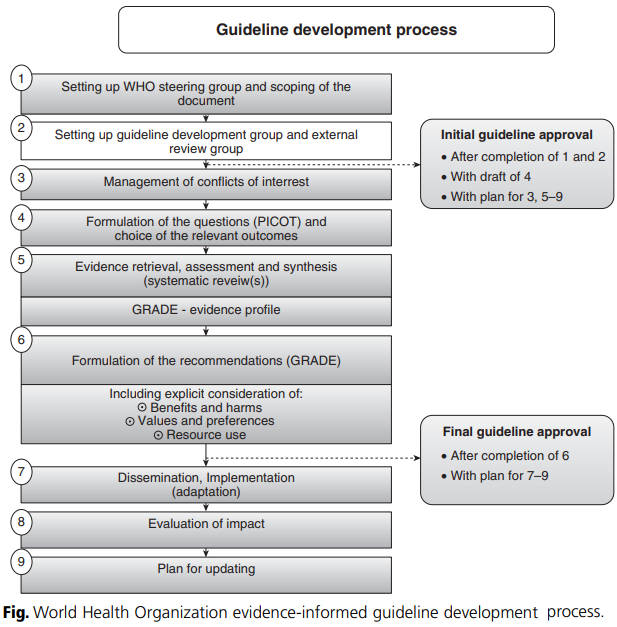
The evidence hierarchy method is used to evaluate the quality of evidence. For example, evidence based on randomized controlled trials (RCTs) is considered high quality. The process for developing evidence-informed guidelines was developed by WHO (2009). It consists of a nine step procedure as shown in figure below.
Wednesday, July 29, 2020
Excess iodine intake and its relation with thyroid dysfunction
For the control of Iodine Deficiency Disorder (IDD), Universal salt Iodization (USI) was implemented. As a result of it, Nepal is heading towards iodine sufficiency however the prevalence of clinical and sub-clinical hypothyroidism is still higher.The increased prevalence of thyroid disorders can be result of iodine deficiency or excess of iodine intake. The prevalence of excess iodine intake is hiking all over the world including Nepal. A study done in 1000 patients (with 270 clinical hypothyroidism patients) showed anti-TPO (Thyroid Peroxidase) antibody positive. The study also stated that the cause of hypothyroidism in present day Nepal was chronic autoimmune thyroiditis (Hashimoto's thyroiditis). As stated earlier, the status of iodine consumption in Nepal is moving from iodine deficiency to adequate or excess, there might be higher burden of thyroid disorders in Nepal due to the increased prevalence of autoimmune thyroiditis (Pokharel, S., 2019).
A community based cross sectional study done in Udaypur (Nepal) in primary school aged children (6 years to 12 years) showed 10% (n=20) prevalence of thyroid dysfunction (sub-clinical hypothyroidism). Majority of the participants were reported to have excess urinary iodine concentration (UIC). The sensitive marker of recent dietary iodine intake is Urinary iodine rather than thyroid dysfunction. The analysis of thyroid hormones showed 1.6% of school age children had sub-clinical hyperthyroidism.
Monday, July 13, 2020
Is it time to revisit the standard of "Iodised salt"?

Saturday, July 4, 2020
Vitamin and mineral requirements in human nutrition

Tuesday, June 30, 2020
Compilation of nutrition and health claims evaluated by EFSA

Sunday, June 28, 2020
EFSA evaluation of health claims related to COPPER

Claims
|
EFSA opinion
reference
|
Status
|
Copper contributes to maintenance of normal
connective tissues
|
2009;7(9):1211
|
Authorised
|
Copper contributes to normal
energy-yielding metabolism
|
2009;7(9):1211
2011;9(4):2079
|
Authorised
|
Copper contributes to normal functioning of
the nervous system
|
2009;7(9):1211
2011;9(4):2079
|
Authorised
|
Copper contributes to normal hair
pigmentation
|
2009;7(9):1211
|
Authorised
|
Copper contributes to normal iron transport
in the body
|
2009;7(9):1211
|
Authorised
|
Copper contributes to normal skin
pigmentation
|
2009;7(9):1211
|
Authorised
|
Copper contributes to the normal function
of the immune system
|
2009;7(9):1211
2011;9(4):2079
|
Authorised
|
Copper contributes to the protection of
cells from oxidative stress
|
2009;7(9):1211
|
Authorised
|
Copper contributes to the cholesterol and
glucose
|
2009;7(9):1211
|
Non-authorised
|
Saturday, June 27, 2020
Non-Authorized (Rejected) Health Claims related to Calcium
Rejected Claims
|
EFSA opinion Reference
|
Calcium
contributes to normal functioning of cells.
|
2010;8(10):1725
|
Calcium
helps manage your weight
|
2010;8(10):1725
|
Calcium
contributes to weight control. Calcium modulates energy metabolism
|
|
Calcium
helps to keep a healthy blood pressure.
|
2009;7(9):1210
|
Calcium
naturally present in dairy products is important for weight management
|
2010;8(10):1725
|
Dairy
calcium has been shown to stimulate lipolysis.
|
|
Consumption
of dairy calcium aids weight loss.
|
|
Dairy
calcium modulates fat metabolism.
|
|
Dairy
calcium helps promote fat loss.
|
|
Calcium
promotes a healthy heart. Calcium maintains a healthy heart. Calcium helps
build a healthy heart. Calcium helps promote a healthy heart
|
2009;7(9):1210
|
Oyster
shells are rich source of calcium that contributes to healthy blood
cholesterol level/ Oyster shells are a rich source of calcium that helps to
maintain normal cholesterol level/Oyster shells are a rich source of calcium
that decreases LDL cholesterol and increase HDL cholesterol.
|
2010;8(10):1725
|
Diet
which includes several daily servings of low-fat milk products (about 1200 mg
of calcium/day) helps to control blood pressure.
|
2009;7(9):1210
|
Supplementation
with B-vitamins, iron, magnesium as well as vitamin C can reduce fatigue and
tiredness in situations of inadequate micro-nutrient status.
|
2010;8(10):1725
|
Water-soluble
vitamins, calcium, magnesium and zinc are essential for mental function and
performance
|
2010;8(10):1725
|
In situations of
inadequate micronutrient status, supplementation with water-soluble vitamins,
minerals and zinc can sustain mental performance (e.g. concentration,
learning, memory, reasoning).
|
|
Calcium
supports the regulation of the acid base balance
|
2011;9(6):2201
|
Calcium
strengthens the nails.
|
2010;8(10):1725
|
Calcium
phosphoryl oligosaccharide restores
tooth enamel after meals, increases tooth surface hardness, helps strengthen
teeth.
|
2011;9(6):2267
|
Calcium-containing
fruit juices: Reduced risk for dental
erosion
|
Q-2009-00501
|

List of EFSA approved Health Claims for Calcium
Approved Claims
|
EFSA opinion Reference
|
Calcium
contributes to normal blood clotting
|
2009;7(9):1210
|
Calcium
contributes to normal energy-yielding metabolism
|
2009;7(9):1210
|
Calcium
contributes to normal muscle function
|
2009;7(9):1210
|
Calcium
contributes to normal neurotransmission
|
2009;7(9):1210
|
Calcium
contributes to the normal function of digestive enzymes
|
2009;7(9):1210
|
Calcium has a
role in the process of cell division and specialisation
|
2010;8(10):1725
|
Calcium is
needed for the maintenance of normal bones
|
2009;7(9):1210
2009;7(9):1272
2010;8(10):1725
2011;9(6):2203
|
Calcium is
needed for the maintenance of normal teeth
|
2009;7(9):1210
2010;8(10):1725
2011;9(6):2203
|
Conditions of use of the claim: The claim may be used only for food which is at least a source of calcium as referred to in the claim SOURCE OF [NAME OF VITAMIN/S] AND/OR [NAME OF MINERAL/S] as listed in the Annex to Regulation (EC) No 1924/2006.

Saturday, June 20, 2020
Saturday, May 2, 2020
Vitamin D & COVID-19
Evidence that Vitamin D Supplementation Could Reduce Risk of Influenza and COVID-19 Infections and Deaths
Abstract
The world is in the grip of the COVID-19 pandemic. Public health measures that can reduce the risk of infection and death in addition to quarantines are desperately needed. This article reviews the roles of vitamin D in reducing the risk of respiratory tract infections, knowledge about the epidemiology of influenza and COVID-19, and how vitamin D supplementation might be a useful measure to reduce risk. Through several mechanisms, vitamin D can reduce risk of infections. Those mechanisms include inducing cathelicidins and defensins that can lower viral replication rates and reducing concentrations of pro-inflammatory cytokines that produce the inflammation that injures the lining of the lungs, leading to pneumonia, as well as increasing concentrations of anti-inflammatory cytokines. Several observational studies and clinical trials reported that vitamin D supplementation reduced the risk of influenza, whereas others did not. Evidence supporting the role of vitamin D in reducing risk of COVID-19 includes that the outbreak occurred in winter, a time when 25-hydroxyvitamin D (25(OH)D) concentrations are lowest; that the number of cases in the Southern Hemisphere near the end of summer are low; that vitamin D deficiency has been found to contribute to acute respiratory distress syndrome; and that case-fatality rates increase with age and with chronic disease comorbidity, both of which are associated with lower 25(OH)D concentration. To reduce the risk of infection, it is recommended that people at risk of influenza and/or COVID-19 consider taking 10,000 IU/d of vitamin D3 for a few weeks to rapidly raise 25(OH)D concentrations, followed by 5000 IU/d. The goal should be to raise 25(OH)D concentrations above 40–60 ng/mL (100–150 nmol/L). For treatment of people who become infected with COVID-19, higher vitamin D3 doses might be useful. Randomized controlled trials and large population studies should be conducted to evaluate these recommendations.View Full-Text
Nutrients 2020, 12(4), 988; https://doi.org/10.3390/nu12040988